
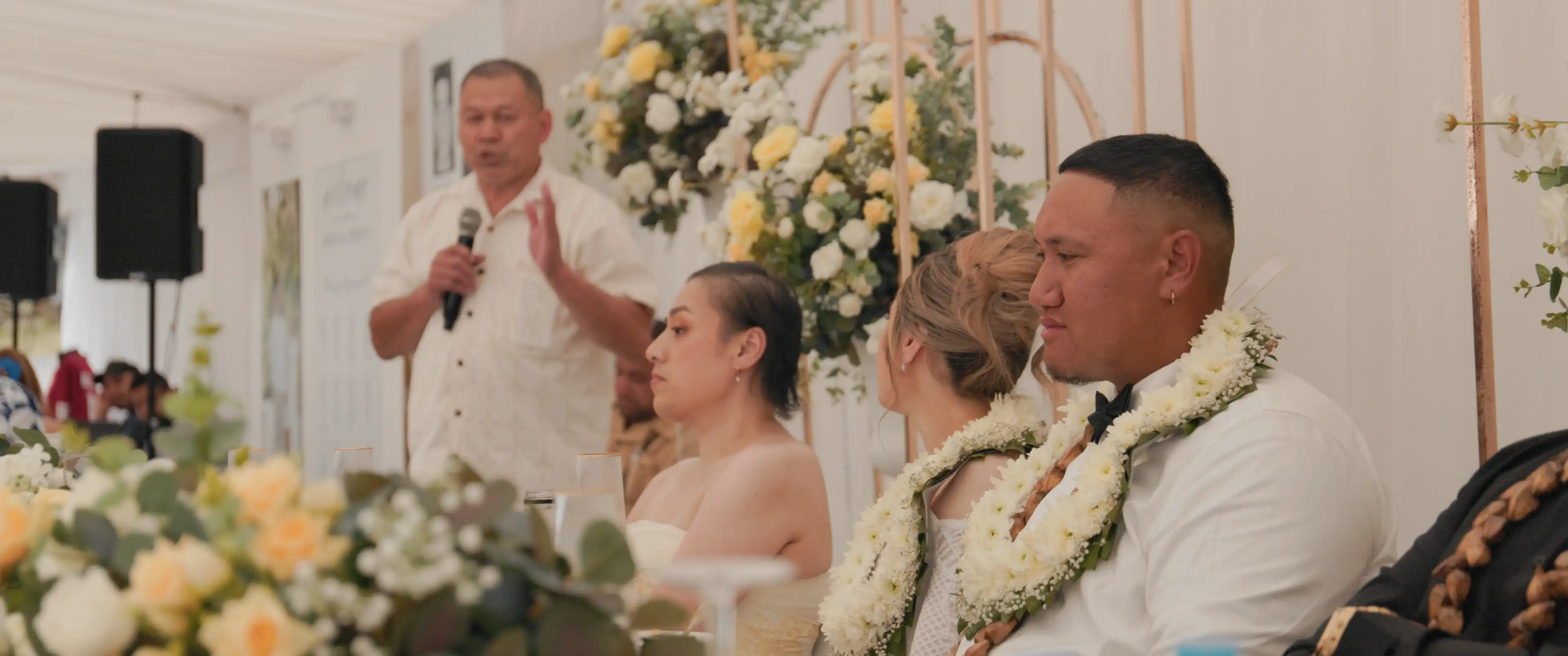
When couples think about wedding videography, they usually think about colour, camera movement, slow motion, drone shots, and the overall look of the film. All of that matters. But if the vows are thin, the speeches are distorted, or the room atmosphere feels flat, even very strong visuals lose impact. Audio is not a technical extra. It is one of the main reasons a wedding film feels cinematic, intimate, and worth coming back to.
Why couples feel audio before they think about it
A wedding day is full of moments that are only powerful because of what is being said and how it sounds. The quiet just before a ceremony starts. A shaky breath before vows. A line in a speech that lands harder than expected. The room lifting when people laugh together. Those moments are emotional because they are heard, not just seen.
That is why polished wedding films do not rely on camera microphones alone. The camera can capture atmosphere, but it is rarely enough on its own for vows, speeches, or capturing the emotion of the day. Good wedding audio comes from planning, redundancy, and knowing where problems usually happen before they happen.
Simple version: if you want your film to feel personal rather than generic, audio quality is one of the biggest deciding factors.
What usually matters most on a wedding day
Most couples are not asking for “audio coverage” in those words, but they absolutely notice the result. The parts that tend to matter most are the vows, the celebrant or officiant, readings, speeches, and reactions from family and friends.
The most emotionally important section for most couples, and one of the most replayed parts of a film.
Often the richest source of story, humour, and family context in the final edit.
Applause, laughter, clinking glasses, crowd energy, wind through trees, and room tone make the film feel grounded.
Morning prep audio is more useful than most people realise
The morning is not usually about perfectly clean dialogue from start to finish. It is about collecting useful texture. That might be letter reading, short exchanges with parents, a few words between the bridal party, or simply natural sound that gives the edit more shape. A dress zip, a toast, a laugh just off camera, shoes on the floor, hairspray in the background, a room settling before everyone leaves. Small sounds like that help the whole film breathe.
When couples write letters to each other or plan a first look with private vows, the audio value increases again. Those moments often become anchors for the highlight film because they add a layer of meaning that visual montage alone cannot provide.
Ceremony audio is where the standard of the whole film is usually decided
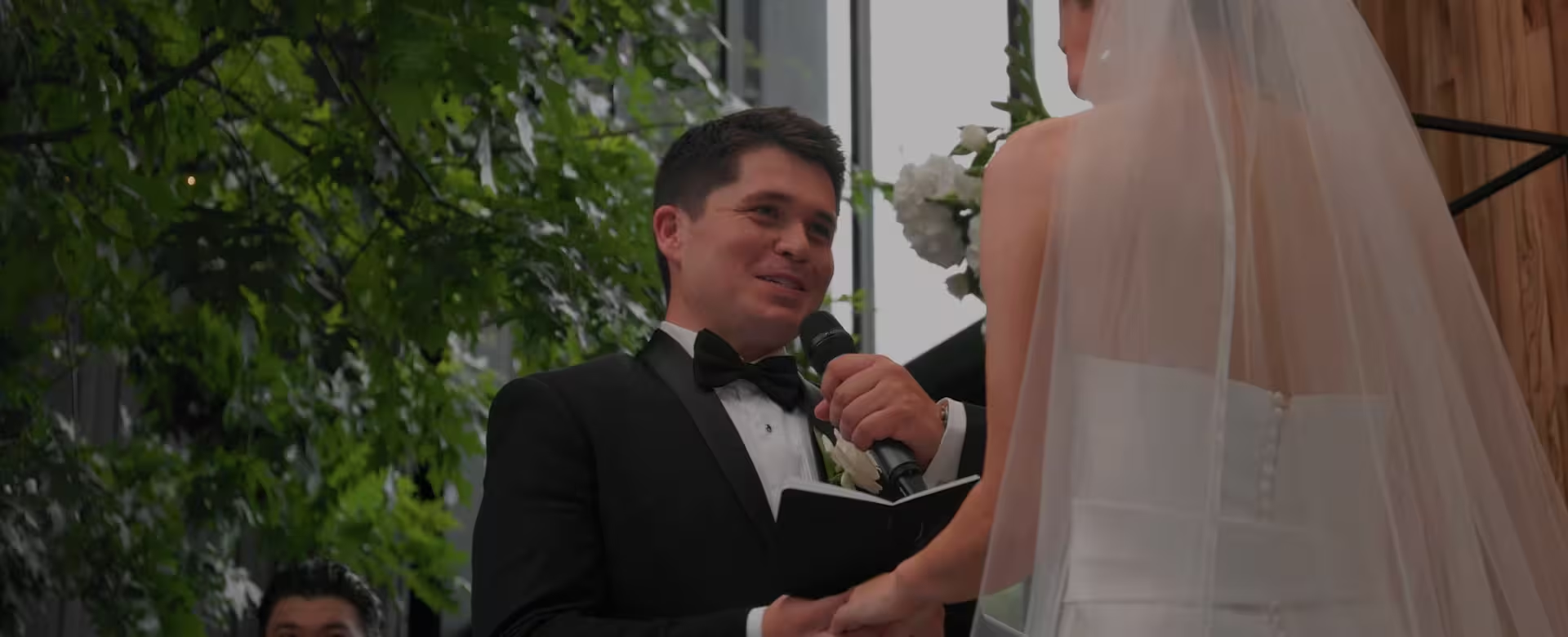
If ceremony audio is poor, the film starts on the back foot. This is where the most important words of the day happen, usually in front of guests, often outdoors, and often with a venue setup that was designed first for the live experience, not necessarily for clean recording.
That means a wedding videographer has to think beyond one source. A single feed from a venue system can fail. A single mic on one person can miss balance. Wind can ruin a beautiful outdoor setup. A celebrant microphone can be clean while the couple themselves are still too quiet. The solution is not one magic piece of gear. It is a layered approach.
What helps
Redundant recording, close mic placement, clean gain staging, and separate ambient sound to preserve the feel of the space.
What causes problems
Wind, poor PA systems, last-minute setup changes, low speaking volume, hard reflective rooms, and venues with limited outputs.
Speeches are where the story often becomes obvious
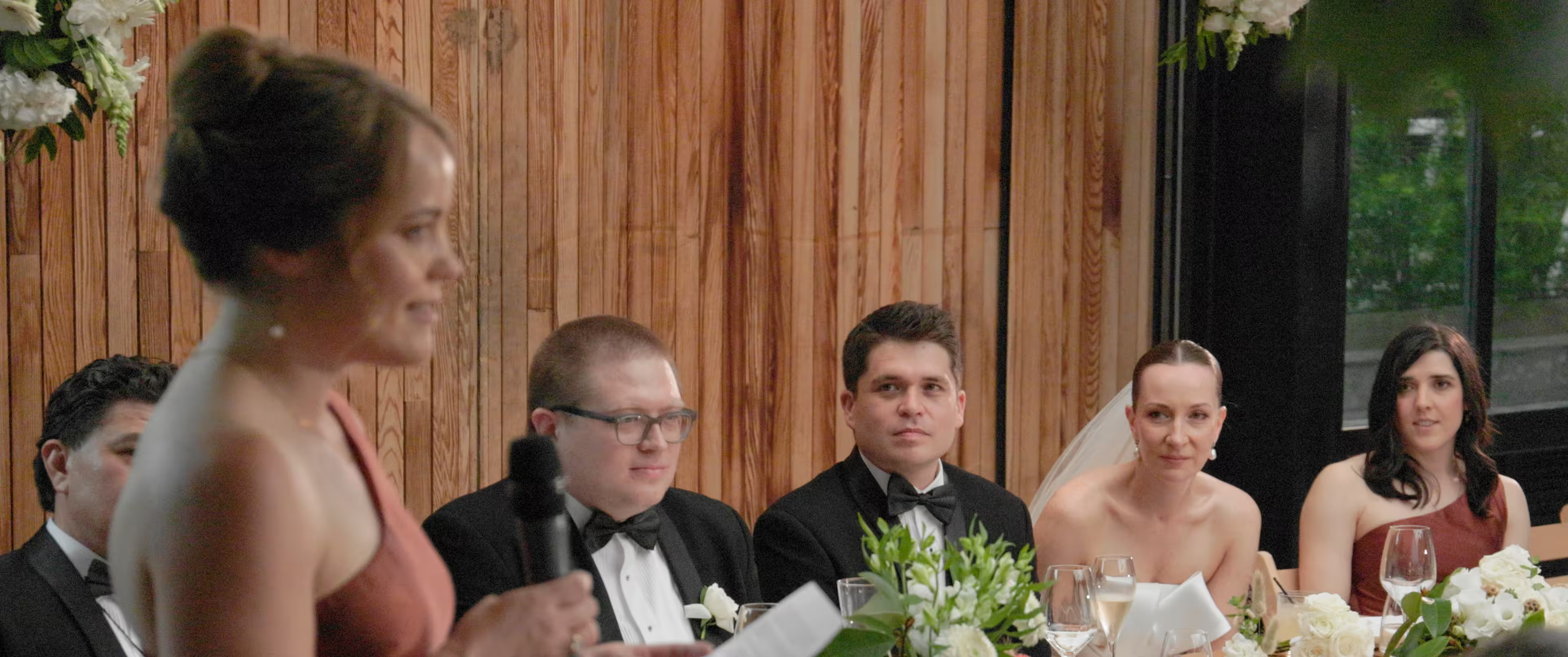
Vows are intimate. Speeches are expansive. They introduce family history, in-jokes, context, vulnerability, and often the lines that shape the whole final edit. Some of the most meaningful wedding films are built around speeches because they reveal how the couple is seen by the people around them.
That only works if the speeches are actually usable. Distortion, clipping, inconsistent levels, and noisy rooms can all flatten the result. Good audio capture makes it possible to use speech excerpts with confidence rather than treating them as a compromised backup.
On a strong wedding day, speeches do more than document what happened. They give the film its voice and help build the story of the day.
Why ambient sound matters as much as microphones
Clean dialogue is one half of the job. The other half is atmosphere. A film with only perfect speech and music can still feel sterile if there is no room tone, no crowd response, no subtle sound of movement, and no sense of the environment the couple were actually in.
Ambient sound is what helps transitions feel natural. It supports emotion without forcing it. It lets a look across the aisle land properly. It makes applause feel earned. It gives energy to entrances, hugs, and dance floor moments. This is one of the details that separates something polished from something that merely looks polished.
Common wedding audio problems in Auckland and beyond
Every region has its patterns. Around Auckland, outdoor ceremonies and variable weather can make wind a genuine issue. Some venues have excellent in-house systems. Some do not. Some celebrants are great on a microphone. Some speak softly and move unpredictably. Some bands or DJs provide clean outputs. Others are harder to work around in real time.
The point is not that venues or vendors are a problem. It is that audio quality depends on how all of those moving parts interact on the day. A videographer needs to be prepared for the setup that was planned and the setup that actually happens.
Things couples should ask before booking
- How are vows recorded if the ceremony is outdoors?
- Do you record speeches from more than one source?
- How do you handle venues with limited audio outputs?
- Do you capture ambient sound separately from dialogue?
- What happens if one audio source fails?
What I am trying to preserve in the final film
The goal is not just technical cleanliness. The goal is preserving meaning. I want the words to feel close. I want pauses to sit naturally. I want a room to sound like a room rather than a vacuum. I want speeches to have enough weight that they can carry emotion without being buried under music. And I want the final film to still feel immediate when you watch it years later.
That matters whether you are booking a short highlight film or fuller coverage that includes the ceremony and speeches in more complete form. Audio quality affects both. It shapes the emotional read of the day, the pacing of the edit, and how often the finished piece still gets replayed.
Practical tips for couples who want a stronger film
These can become some of the strongest story elements in the final film if they are planned properly.
It helps audio planning, especially when live music, multiple speech locations, or unusual venue logistics are involved.
Sudden microphone swaps and last-minute speaker moves can affect recording reliability.
Some setups are excellent, but redundancy is still what protects the final film.
Why this matters more than specs on a booking page
Resolution, frame rates, and cameras are easy to compare because they are concrete. Audio is harder to market because couples usually only notice it when it is bad. But in practice, it is one of the most important parts of a wedding film feeling premium. Strong audio lets the film hold attention, carry emotion, and age well.
If you are comparing videographers, this is worth paying attention to. A film can look cinematic at first glance and still fall short if the words that matter most are not captured cleanly. The best wedding films are not just beautiful. They are clear, intentional, and emotionally legible.
Planning your wedding film
If you are looking for an Auckland wedding videographer and you care about vows, speeches, and the overall feel of the day being captured properly, that is something worth discussing before you book. You can also view more work on the portfolio section, browse the wider blog, or get in touch directly through the contact page.